In the world of fine jewels, rarity is a quality that transcends beauty. A gem may sparkle with extraordinary colour, but when it is also found in only one location on Earth, its allure deepens. Among such treasures, Tanzanite holds a remarkable place. This vivid blue-violet jewel, discovered less than sixty years ago, has quickly become recognised as one of the world’s rarest gemstones. For collectors, jewellery lovers, and investors, Tanzanite offers not only exquisite beauty but also an irreplaceable connection to East Africa’s geology and cultural heritage.
Defining Rarity in Gemmology
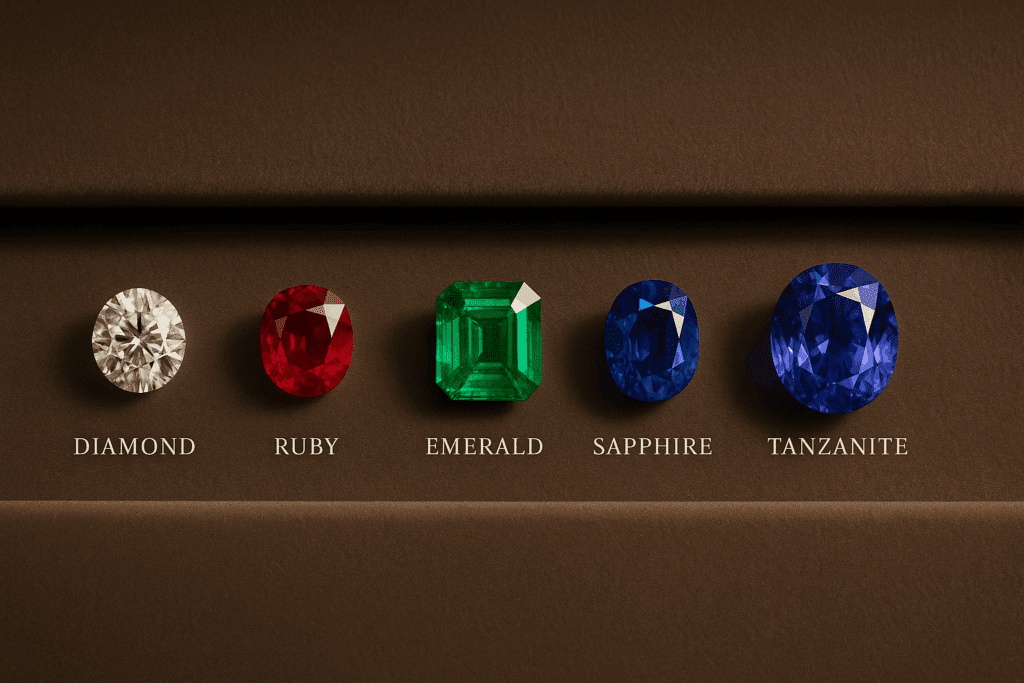
Rarity in gemmology is measured by more than just price. A gemstone is considered rare when its natural occurrence is severely limited and when it displays qualities that cannot be easily replicated. Geological scarcity, unique optical features, and restricted mining zones all contribute to rarity. Collectors also place value on the cultural significance of a gemstone and the likelihood that future supply may diminish.
Diamonds, while precious, are mined on multiple continents. Tanzanite, by contrast, is confined to a geological belt only a few kilometres wide in Tanzania’s Mererani Hills. This single-source origin sets it apart and makes its rarity comparable to or even greater than many of the world’s legendary jewels.
Tanzanite’s Uniqueness
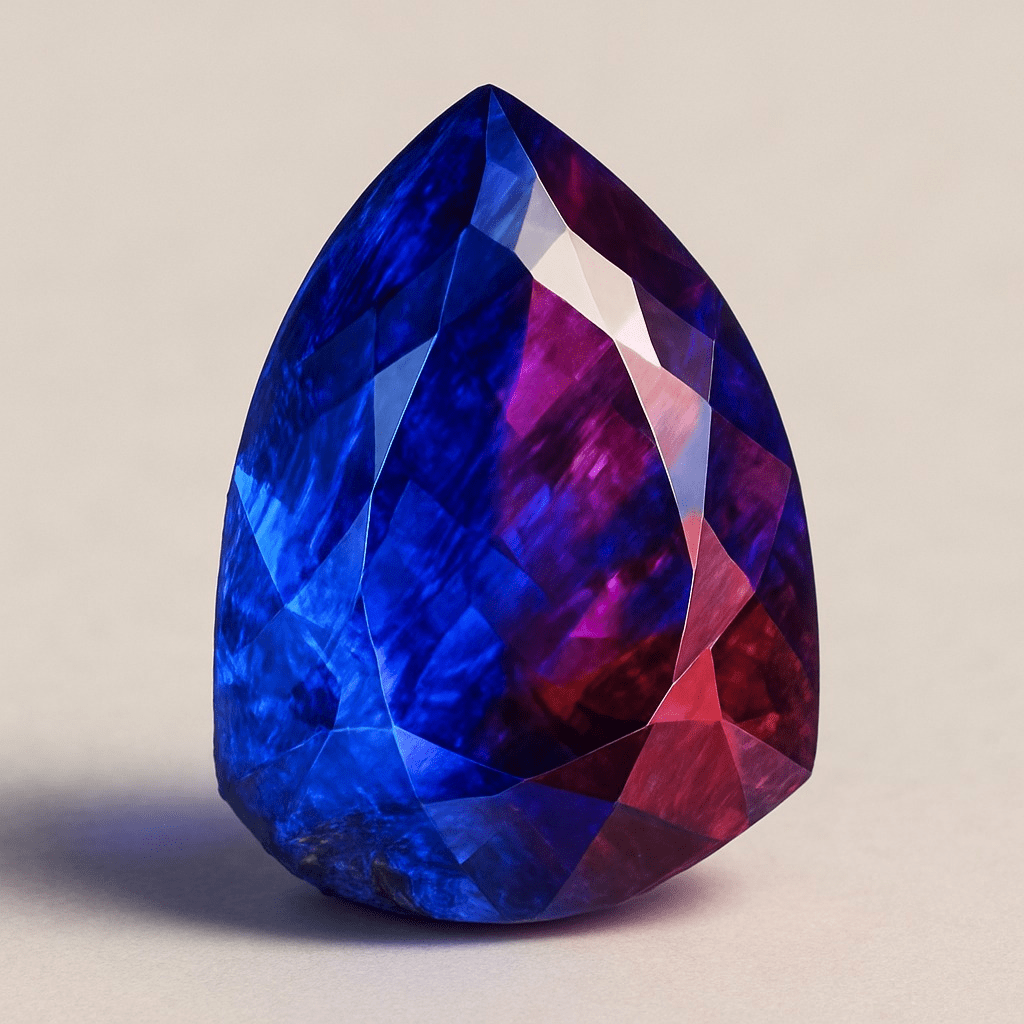
Tanzanite was formed around 585 million years ago during tectonic activity beneath Mount Kilimanjaro. This rare geological event created the perfect conditions for vanadium-rich crystals to grow, resulting in the spectacular hues for which the gemstone is known.
One of Tanzanite’s defining qualities is pleochroism – the ability to show different colours when viewed from different angles. In its natural state, Tanzanite can display blue, violet, and burgundy, a feature unique among coloured gems. Heat treatment, a common and stable process, enhances its blue-violet tones and reduces the brown or burgundy shades, making the colours more vivid and suitable for fine jewellery.
Importantly, Tanzanite occurs only in one place on Earth: the Mererani Hills of northern Tanzania. Unlike diamonds or sapphires, which can be found in multiple countries, this exclusivity adds to its mystique. Geologists estimate that the known reserves may be exhausted within a few decades, which further heightens their rarity.
Comparison with Other Rare Gems
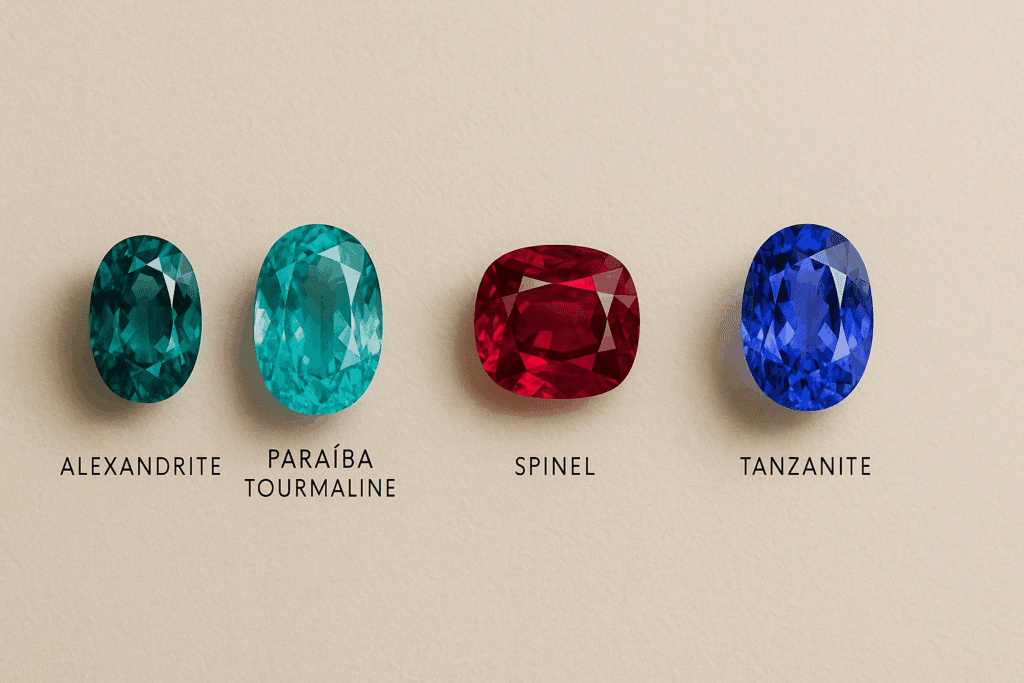
When compared with the world’s other rare gemstones, Tanzanite’s position is secure.
- Alexandrite – Famous for its dramatic colour change from green in daylight to red under incandescent light. Alexandrite is exceptionally scarce, with original Russian sources largely depleted.
- Paraiba Tourmaline – Discovered in Brazil in the 1980s, this neon-blue tourmaline owes its electrifying colour to copper. Stones of fine quality are rarer than diamonds, with high values at auction.
- Spinel – Once mistaken for ruby, fine red and vivid cobalt-blue spinels are among the scarcest gems today. Spinel has gained prominence, but supply is limited to a few mines in Myanmar, Sri Lanka, and Tanzania.
- Jadeite – Prized in Asian culture, particularly in imperial green, jadeite of fine quality is both culturally and geologically rare, making it highly collectable.
Against these, Tanzanite stands out for its combination of size availability, vivid pleochroic colour, and single-source origin. Its rarity is not only natural but also time-bound: unlike sapphires or emeralds, new Tanzanite deposits are unlikely to be found elsewhere.
Why Collectors Prize Tanzanite

Collectors and investors value Tanzanite for both emotional and practical reasons. Introduced to the global market by Tiffany & Co. in 1968, it was hailed as “the most beautiful blue gemstone discovered in 2000 years.” This marketing brought Tanzanite to international attention, and demand has grown steadily ever since.
Large crystals of over 20 carats are particularly rare and highly sought after by collectors. Unlike smaller gems, these large examples are harder to find and often command premium prices. Even in smaller sizes, Tanzanite’s saturated blue-violet hues are captivating and versatile for jewellery design.
As supply continues to diminish, Tanzanite’s value proposition strengthens. Unlike diamonds, which benefit from established global reserves, Tanzanite’s source is finite. For many collectors, this looming scarcity makes Tanzanite not only a jewel of beauty but also an intelligent addition to a diversified investment collection.
Ethical Sourcing and Heritage Value
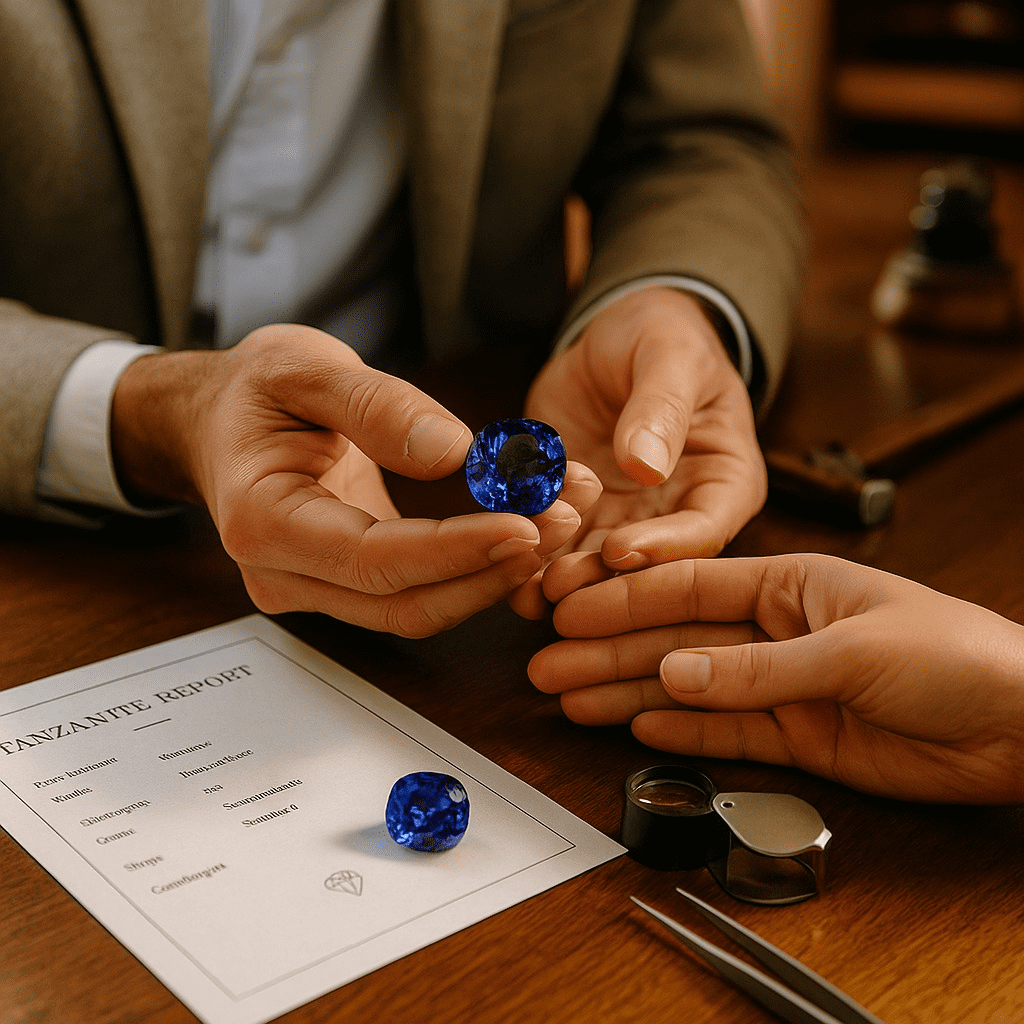
Modern collectors are as concerned with provenance as they are with beauty. Tanzanite has benefited from Tanzanian government policies aimed at regulating its mining and ensuring that benefits reach local communities. While challenges remain, regulated operations provide greater transparency and accountability.
For discerning buyers, it is equally important to work with trusted jewellers who prioritise ethical sourcing. At Prins & Prins, we uphold the highest standards of transparency and craftsmanship, ensuring that each piece of Tanzanite Jewellery is not only a masterpiece of design but also a testament to responsible sourcing.
Cape Town adds another dimension to this heritage. Situated in the historic Huguenot House, Prins & Prins combines gemmological expertise with South Africa’s cultural richness, offering clients both education and elegance. This context makes the acquisition of Tanzanite not just a purchase but part of a broader story of heritage, trust, and refinement.
Conclusion
Among the world’s rarest gemstones, Tanzanite holds a unique place. Its single origin beneath Mount Kilimanjaro, its mesmerising pleochroic colours, and its finite supply combine to create a jewel unlike any other. When compared to Alexandrite, Paraiba Tourmaline, Spinel, and Jadeite, Tanzanite stands tall – a modern discovery that has already secured its status in the pantheon of rare gems.
For collectors, investors, and those seeking a meaningful jewel, Tanzanite represents not just rarity but legacy. To hold it is to hold a fragment of Earth’s deep history, an African treasure whose value grows as time passes.
At Prins & Prins, we are proud to showcase this extraordinary gem within our heritage setting in Cape Town. Each piece of Tanzanite Jewellery we create connects clients to both Africa’s natural wonders and the timeless artistry of fine jewellery.