In recent years, few debates in the jewellery world have attracted as much attention as the rise of lab-grown diamonds. Touted as ethical, affordable, and virtually indistinguishable from natural gems, they have captured the curiosity of many buyers. For couples shopping for an engagement ring or collectors seeking brilliance at a lower cost, the idea of a lab-grown diamond can sound compelling.
But when measured against natural diamonds — those rare treasures formed deep within the Earth over billions of years — the comparison is not as simple as it first appears. At Prins & Prins Diamonds in Cape Town, we believe every client deserves an honest and informed perspective. As a heritage jeweller with decades of expertise, our role is not to sell illusions, but to guide buyers toward choices that balance beauty, authenticity, and long-term value.
What Are Lab-Grown Diamonds?

Lab-grown diamonds are exactly what their name suggests: diamonds created in a laboratory setting using advanced technology. Two primary methods are used:
- High Pressure, High Temperature (HPHT): replicates the natural environment in which diamonds form, using intense heat and pressure.
- Chemical Vapour Deposition (CVD): grows diamonds layer by layer from carbon-rich gases inside a chamber.
Both methods produce diamonds with the same chemical composition as natural diamonds. Under magnification, trained gemmologists can identify tell-tale features such as growth patterns or metallic inclusions, but to the naked eye they appear virtually identical.
The appeal of lab-grown diamonds lies in their lower cost and perceived ethical advantage. Because they are manufactured, they are typically sold at 40–70% less than natural diamonds of comparable size and quality. For buyers focused on appearance alone, this can seem like an attractive alternative.
What Makes Natural Diamonds Unique?
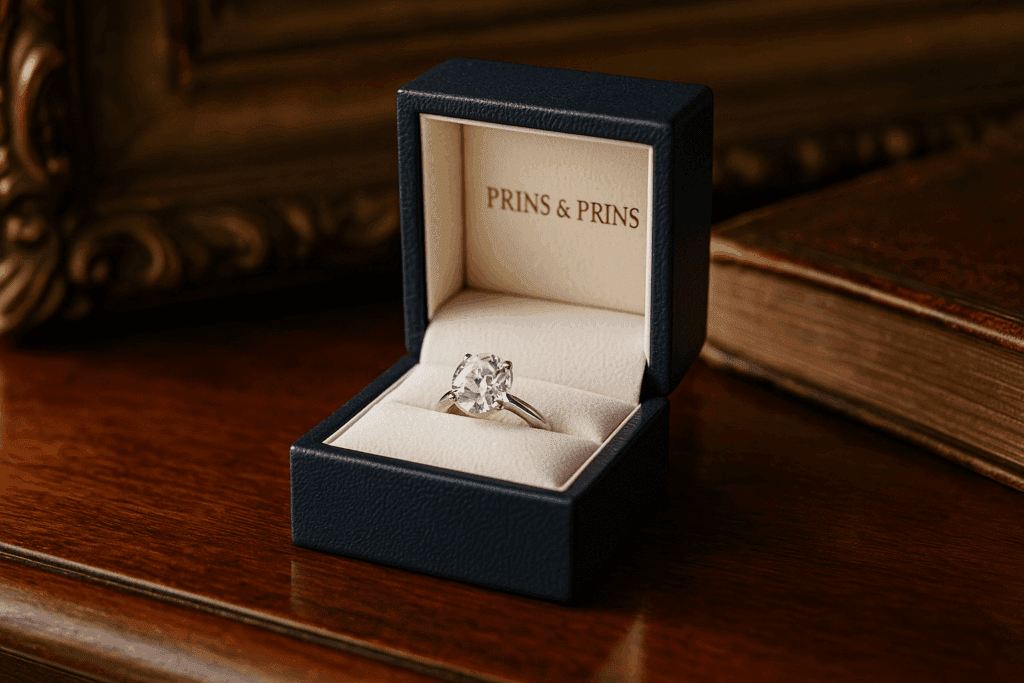
Natural diamonds are geological miracles. Born between 1 and 3 billion years ago, they formed under immense pressure and temperature deep within the Earth’s mantle before being brought closer to the surface through volcanic activity. Their very existence speaks of rarity, endurance, and time.
Beyond their natural beauty, diamonds have carried cultural and symbolic weight for centuries. They represent love, commitment, and permanence — qualities that resonate deeply in engagement rings and family heirlooms.
Most importantly, natural diamonds are finite. Unlike lab-grown gems, they cannot be endlessly reproduced. This scarcity is what underpins their enduring value and ensures they remain treasured assets across generations.
When buyers search for Natural Diamonds Cape Town, they are not simply looking for brilliance; they are seeking a piece of Earth’s history, certified for its authenticity and provenance.
Comparing Beauty and Quality
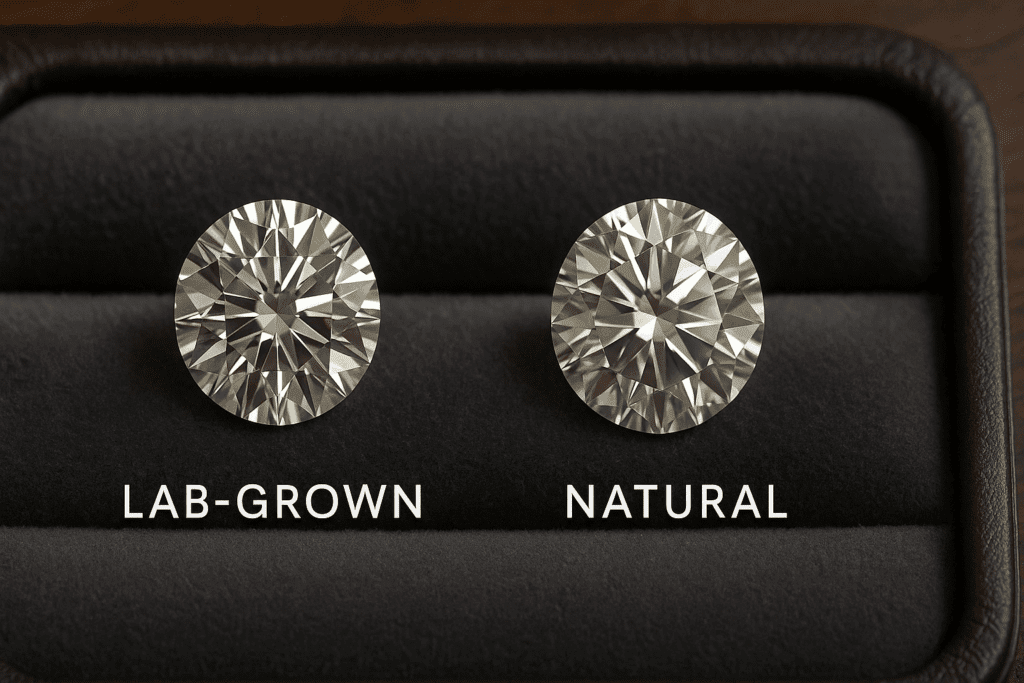
One of the most common questions we hear is: Do lab-grown diamonds look different from natural ones?
The short answer is no — at least not to the untrained eye. Both sparkle with fire and brilliance, and both can be cut, polished, and graded according to the same 4Cs: cut, colour, clarity, and carat weight.
Where the difference lies is in context. A natural diamond’s value is not just in its appearance, but in its authenticity. Its rarity, geological journey, and place in human culture contribute to its appeal. A lab-grown diamond may dazzle today, but its value is diminished by the fact that another identical gem can be grown tomorrow.
Furthermore, market perception matters. While natural diamonds are recognised globally as luxury assets, lab-grown diamonds are increasingly seen as commodities, with resale values dropping sharply as technology improves and production costs fall.
Ethical and Environmental Considerations
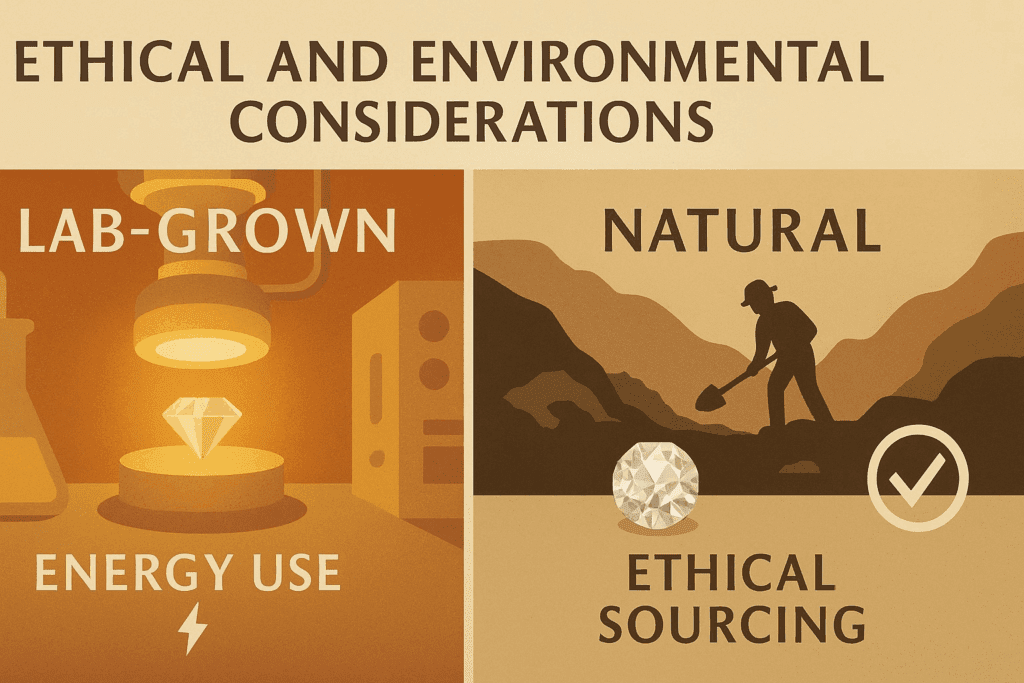
Lab-grown diamonds are often marketed as “ethical” or “eco-friendly.” While this appeals to buyers conscious of sustainability, the reality is more nuanced.
- Lab-grown diamonds require immense energy consumption, often from coal- or gas-based power sources. A single carat can demand weeks of continuous high-energy processes.
- Natural diamonds, when sourced responsibly, support communities through employment, healthcare, and infrastructure in mining regions. Certified suppliers ensure gems are conflict-free and mined under ethical conditions.
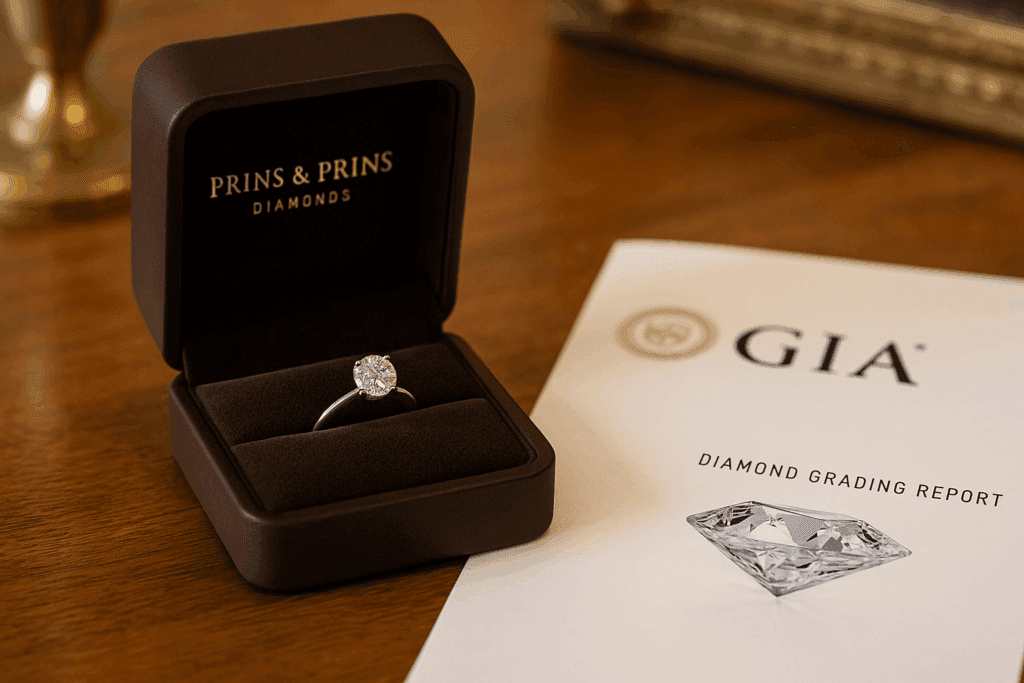
At Prins & Prins, every diamond is natural, conflict-free, and accompanied by certification. We work only with trusted sources, ensuring provenance is clear and transparent. For clients concerned with ethics, this guarantees peace of mind without compromising the authenticity of their jewel.
Investment and Legacy
Perhaps the most significant distinction between lab-grown and natural diamonds is long-term value.
- Natural diamonds hold and often increase their value. Their rarity and demand ensure they remain treasured assets. Heirloom diamonds retain meaning across generations, carrying both financial and emotional worth.
- Lab-grown diamonds depreciate quickly. As technology advances and production becomes cheaper, lab-grown diamonds continue to flood the market. What seems like a saving today may hold little to no value tomorrow.
For an engagement ring — a jewel meant to symbolise eternal love — or for a collector seeking an enduring asset, natural diamonds remain unmatched.
The Cape Town Context

Cape Town is one of the world’s great diamond destinations. International travellers often combine their visit to the Cape Winelands or Table Mountain with a search for a jewel that symbolises South Africa’s rich natural heritage.
At Prins & Prins, situated in the historic Huguenot House, we combine gemmological expertise with heritage storytelling. Our showroom and museum of gems and jewellery provide clients with an immersive experience, offering education alongside elegance.
Local clients too recognise that while lab-grown diamonds may appear cheaper, natural diamonds carry the trust, provenance, and prestige that only a heritage jeweller can guarantee.
An Honest Perspective
It would be unfair to dismiss lab-grown diamonds entirely. They have their place, particularly for fashion jewellery, travel pieces, or clients seeking size and sparkle at a lower cost. For some buyers, they offer an accessible way to enjoy the look of diamonds.
But for life’s most meaningful jewels — an engagement ring, an anniversary gift, or a legacy piece — natural diamonds remain unrivalled. Their rarity, enduring value, and cultural symbolism cannot be replicated in a laboratory.
Conclusion: Why Heritage Matters
At Prins & Prins Diamonds, our philosophy is clear: every jewel should embody love, authenticity, and legacy. As a heritage jeweller in Cape Town, we are proud to be known as The Home of Natural Diamonds.
When clients weigh the choice between lab-grown and natural diamonds, we provide honest guidance rooted in expertise, not marketing trends. Our commitment is to education, transparency, and trust.
Lab-grown diamonds may shine in the moment, but natural diamonds shine forever. They are Earth’s treasures, formed over billions of years, and destined to carry meaning across generations.
For those seeking brilliance, heritage, and security, we invite you to visit Prins & Prins Diamonds at Huguenot House — where every natural diamond is certified, conflict-free, and chosen with care.
Because in the end, a diamond is more than a purchase. It is a legacy.