Debunking the ‘Green’ Myth: The True Footprint of Lab-Grown Diamonds
In recent years, lab-grown diamonds have gained attention as an eco-friendly alternative to natural stones. Marketed as sustainable, modern, and ethical, they appeal to environmentally conscious consumers seeking beauty with minimal impact. But is the label “lab-grown” a guarantee of green credentials?
As with most complex issues, the answer lies in the details. While synthetic diamonds may appear to have a lighter footprint at first glance, the true environmental cost of lab-grown production, especially when examined through an energy lens, tells a far more nuanced story.
The Energy-Intensive Reality Behind Lab-Grown Diamonds
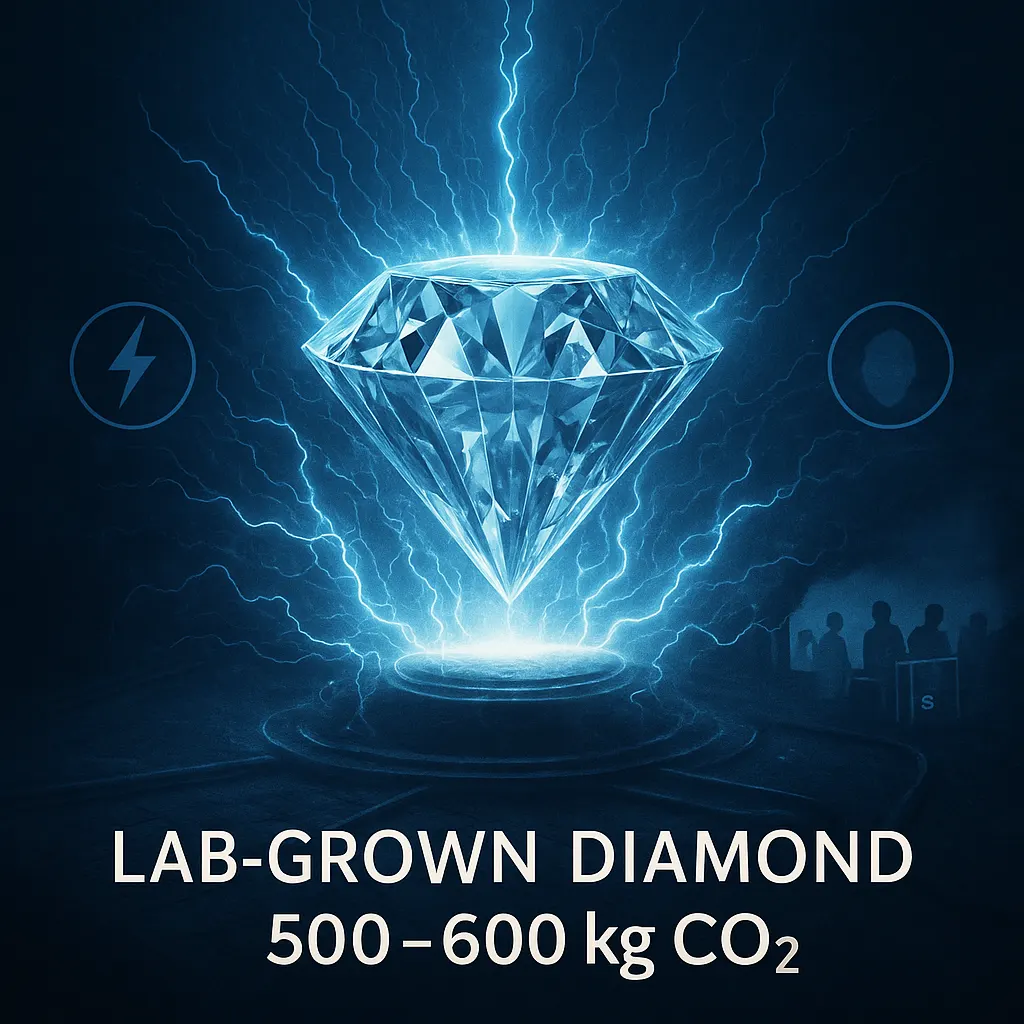
Lab-grown diamonds are produced using two industrial methods: HPHT (High Pressure, High Temperature) and CVD (Chemical Vapour Deposition). Both processes require extreme energy inputs, especially when it comes to sustaining temperatures of over 1,500°C or maintaining plasma chambers for extended periods.
These methods are often powered by electricity from fossil-fuel-heavy grids, particularly in regions like China, India, and the United States, where coal and gas remain the primary energy sources.
Recent studies reveal that a single lab-grown diamond can emit between 500 and 600 kilograms of CO₂ per carat when produced in coal-powered regions. That’s roughly the same as a flight from London to Dubai. In comparison, a natural diamond emits an average of just 160 kilograms of CO₂ per carat, factoring in mining, cutting, and transport.
So while the term “lab-grown” may suggest a clean, low-impact product, the reality, especially in carbon-intensive economies, is often quite the opposite.
Sustainability Depends on the Source, Not the Label
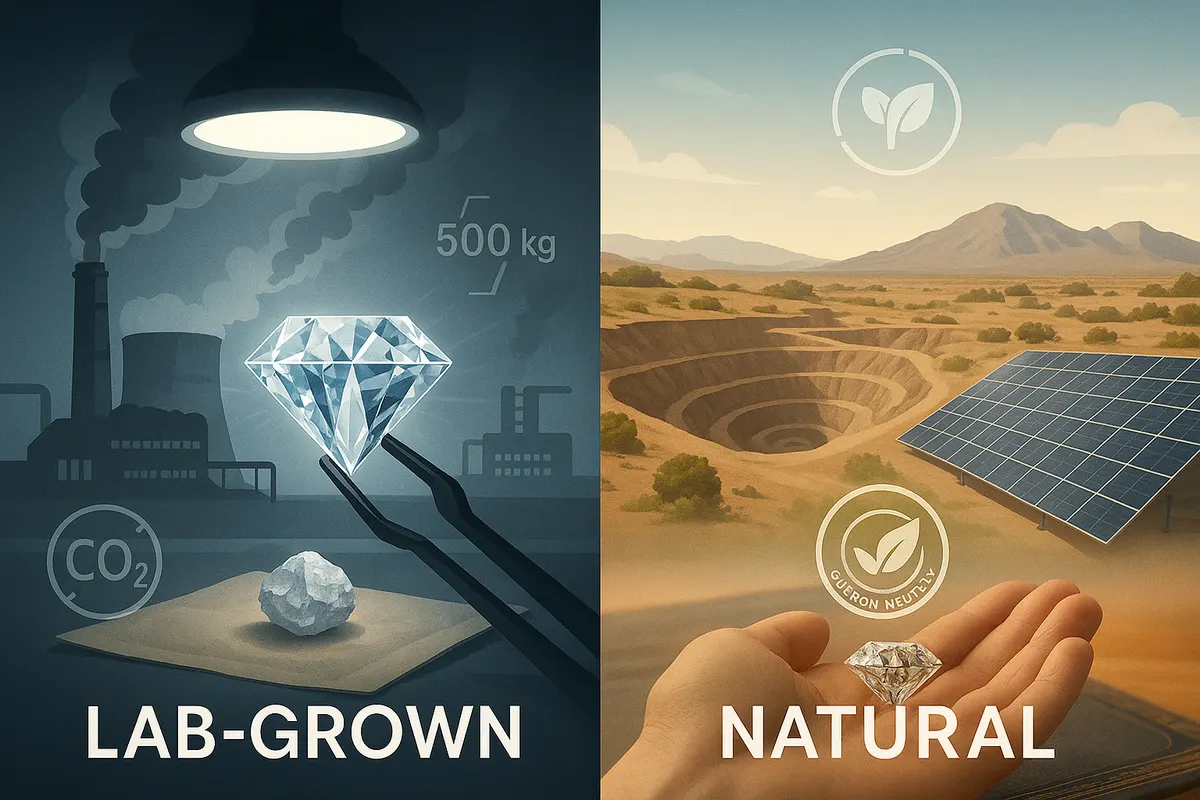
It’s important to move past the binary thinking that “lab = sustainable” and “mine = destructive.” The truth is far more nuanced.
Some synthetic diamond manufacturers operate in countries with limited environmental oversight and carbon-heavy power supplies, which dramatically inflate their ecological footprint. Others may take active steps to reduce impact through renewable energy, but they remain the exception, not the rule.
Meanwhile, several natural diamond producers, particularly in Botswana and Namibia, are investing in carbon-neutral goals. These include:
- Transitioning to solar and wind energy for mining operations
- Rehabilitating mined land into wildlife reserves and grazing areas
- Supporting conservation and reforestation projects in surrounding communities
In other words, the sustainability of a diamond is defined by how it is produced, not whether it was grown in a lab or mined from the earth.
Enduring Value, Ethical Legacy
Beyond carbon emissions, there is another critical dimension to consider: long-term value and lifecycle.
Natural diamonds are rare, finite, and often passed down through generations. Their inherent scarcity means they hold their emotional and monetary value far longer than mass-produced synthetic counterparts.
Lab-grown diamonds, by contrast, are often created in large batches, with ever-decreasing costs and minimal resale value. They’ve become part of the fast-fashion mentality, affordable, temporary, and disposable.
At Prins & Prins, we believe in offering jewellery that not only captivates the eye but also respects the planet and the people who inhabit it. Our curated selection ofCertified Natural Diamonds Cape Town represents a commitment to ethical sourcing, transparency, and traceable origins. These are stones that tell stories, not just of geological wonder, but of human integrity and stewardship.
Explore how these extraordinary diamonds are transformed into bespoke treasures within our collection ofDiamond Jewellery in Cape Town, where heritage, design, and responsibility intersect.
Final Thoughts: Look Beyond the Label
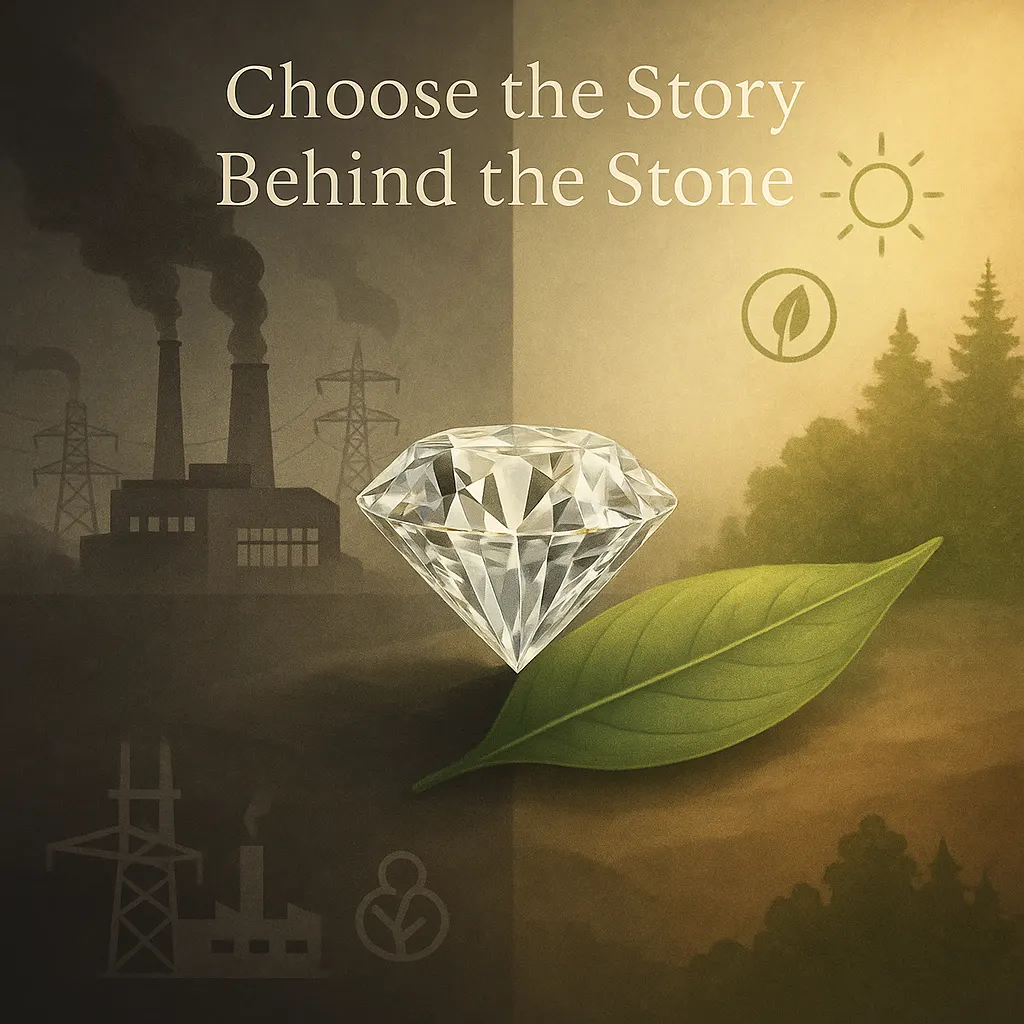
The next time you’re choosing between a lab-grown or natural diamond, consider more than just surface claims. Ask where it was produced, how it was powered, and who benefits from its sale.
Sustainability isn’t about the words “lab-grown” or “mined”, it’s about context, transparency, and long-term impact. When thoughtfully sourced and responsibly crafted, natural diamonds remain a meaningful choice for those who value both elegance and ethics.
At Prins & Prins, we are proud to help you choose a diamond that reflects not just who you are, but what you stand for.
Written by Stacey
Continue your reading.

Lab Grown vs Natural Diamonds: An Honest Buyer's Guide
They look the same. How lab grown and natural diamonds differ in origin, price and resale value.
Read article
How to Avoid Diamond Scams: 10 Red Flags to Know
A Cape Town gemmologist guide to spotting diamond scams: fake certificates, treated stones, dodgy pricing and the ten red flags that give a con away.
Read article
Diamond Certificates Explained: GIA, EGL and More
What a diamond certificate really tells you, how the GIA, the EGL and other laboratories differ, and how to read a grading report before you buy.
Read article