Engagement Rings in Cape Town: The Complete Buyer's Guide
Buying an engagement ring in Cape Town puts you close to the source. South Africa’s diamond story began with the Eureka diamond, found in 1867, and the city still carries it in its workshops, its gem labs and its quiet ateliers. You can meet the gemmologist who grades the stone. You can talk to the goldsmith who will make the ring. And you can compare loose diamonds side by side before a single rand changes hands, which is the best way to judge the engagement rings Cape Town has to offer.
What most first-time buyers need is not more romance around the ring. They need a clear sequence: budget, stone, setting, jeweller. This guide walks that sequence in order, and points you to the deeper articles for each step.
Why Cape Town Is a Strong Place to Buy Engagement Rings
Diamonds mined in South Africa can pass through fewer hands when they are bought in South Africa, and local jewellers can buy directly from diamond suppliers, which can keep the chain between the cutter and the counter short. A Cape Town atelier can show you the exact diamond you are buying, loose, under a microscope, before it is set. Online you are buying from a report and a screen. Here you are buying the stone itself.
The other advantage is craft. Cape Town has a long manufacturing tradition, and the best shops still make their own pieces on site. If a setting needs a change, the workshop is in the same building, not on another continent. Read more about this in our guide to where to buy diamonds in Cape Town.
Engagement Rings and Prices: Set the Budget First
Forget the salary rules. The old “three months’ salary” line came from diamond advertising, not tradition: De Beers suggested one month’s salary in the 1930s, two months in 1980s America and three months in Japan. A ring should fit a real budget, one you can recover from. This is one purchase at the start of a shared financial life, not the test of it.
What matters is what a given budget buys. A modest budget buys a beautiful smaller stone, or a vivid coloured gemstone in a fine setting. A mid budget opens certified diamonds around half a carat to a carat, where cut quality starts to matter enormously. A larger budget opens custom design, ideal cuts and rarer colours. Our guide to how much to spend on an engagement ring breaks this down properly, our guide to affordable engagement ring shopping in Cape Town covers what to look for and what to avoid on a tighter budget, and custom work is more affordable than most people assume.
Diamond Engagement Rings: The Four Cs in Plain Language
Every diamond is graded on the same four things: cut, colour, clarity and carat. In practice, in that order of importance:
Cut is what makes a diamond sparkle. It is the one C decided by human skill, and the one worth paying for. A well-cut stone of modest size will outshine a badly cut larger one.
Colour runs D to Z. D, E and F are colourless. Many buyers choose between G and I, where the stone looks white to the eye and costs far less.
Clarity describes internal marks and surface blemishes. Many are too small to see without a loupe. You pay a premium for perfection nobody can see.
Carat is weight, not size. Shape changes how big a carat looks on the hand.
Our four Cs buying guide goes through each one in depth. And whatever you buy, insist on a certificate from an independent laboratory such as GIA or EGL South Africa. Our gem laboratory, run by GIA graduate gemmologists, can arrange one when a stone does not already have it.
Natural or Lab Grown. Decide Early.
This one decision reshapes the whole budget. Lab grown diamonds sell at a fraction of natural prices, and their prices have fallen steeply in recent years. Natural diamonds hold value differently, and behave differently on the secondary market. Neither is the wrong answer, but it should be a decision, not a default. Our natural vs lab grown comparison lays out both sides without the marketing.
Custom Engagement Rings or Ready Made
A ready made ring is fast. A custom ring is hers alone. At a workshop jeweller the difference is smaller than people think, because you can take a ready made design and change the metal, the stone or the setting. Some couples start with a catalogue design and adjust it. Others bring an idea, a sketch or a family stone. Our guide to custom made jewellery explains the process from first sketch to finished ring, and designing your own bespoke engagement ring covers the ring-specific questions.

Choosing the Jeweller Matters More Than the Discount
A jeweller should have credentials you can check, a workshop you can see and a gemmologist who will show you the stone loose. Ask for a written quote, a return policy and a valuation certificate. If the answer to any of those is vague, walk away. The full list of questions is in our guide to choosing a jeweller in Cape Town, and the common traps are in how to avoid diamond scams.
The Proposal Is Only the Start
Rings need looking after. Insure the ring before it leaves the house: household contents policies often limit cover for jewellery, and a ring worn every day is usually best specified under all-risks cover. Expect a resize at some point, because fingers change with seasons and with years. And have the claws checked at least once a year. Our insurance and care guide and ring resizing guide cover the years after the proposal.
Start with a consultation and a real budget. See the stones under proper light, ask the hard questions, and take your time. Browse the engagement ring collection or book a private consultation to see loose certified diamonds in person.

Sources:
Gemological Institute of America: Diamond Quality Factors
BBC News: De Beers myth: Do people spend a month’s salary on a diamond engagement ring?
South African History Online: First recorded discovery of diamonds in the colonial period of South Africa
Edahn Golan Diamond Research & Data: Lab-Grown Diamond Statistics
STP Intasure: Household Contents vs Personal All-Risks
Continue your reading.

Anniversary Gemstones by Year: The Complete Guide
Which gemstone marks each wedding anniversary, and what a diamond anniversary really is.
Read article
How Much to Spend on an Engagement Ring in South Africa
What South Africans really spend on an engagement ring, why the three-months-salary rule is a myth, and how to get the most beauty for your budget.
Read article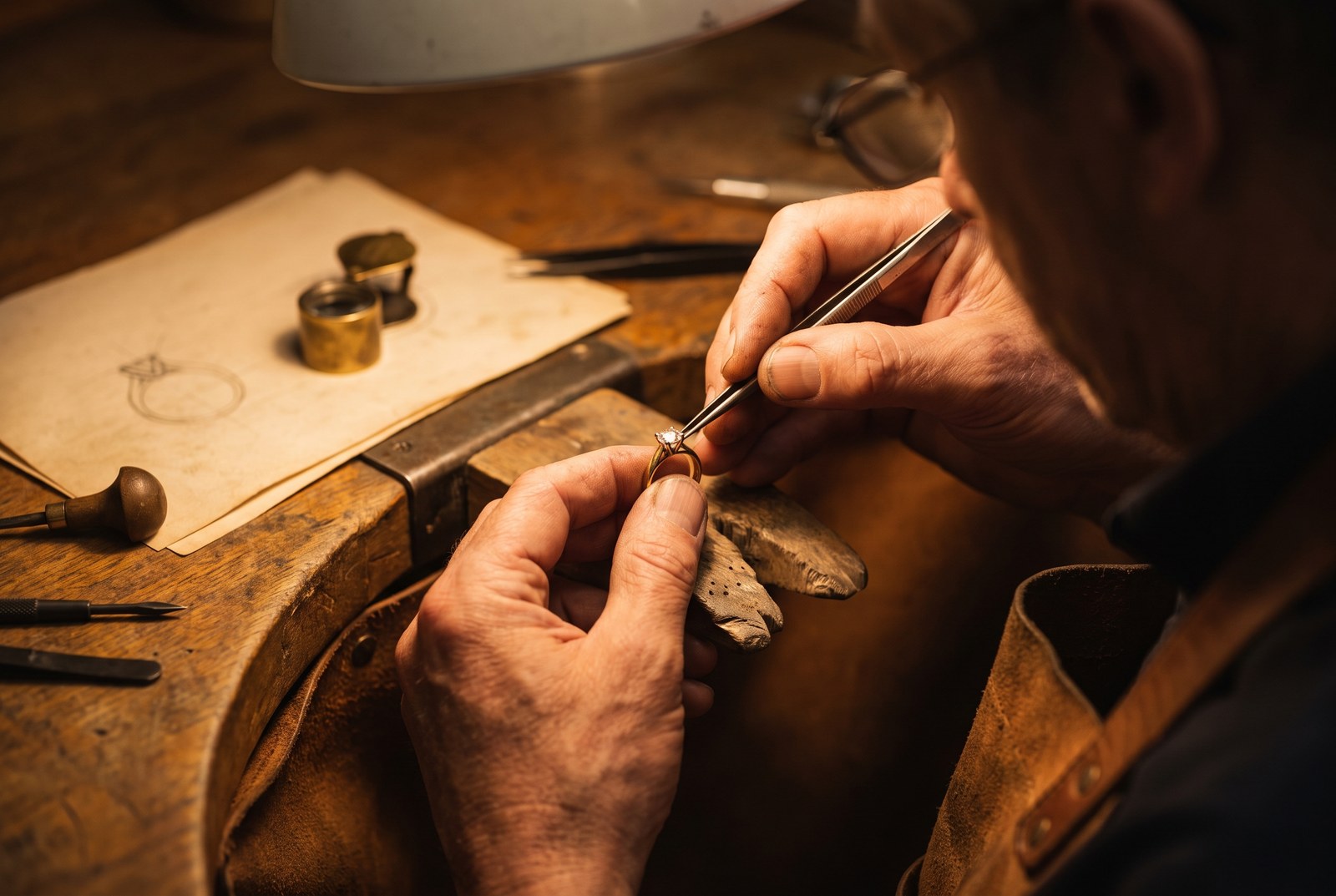
Bespoke Engagement Rings in Cape Town: Design Your Own
How a custom engagement ring is designed and handcrafted in Cape Town, from first sketch to finished ring, and when bespoke costs less than you think.
Read article