What Makes South Africa Unique – Part 3: Archaeology
Where did humankind originate? It is a question that has fascinated scientists and scholars for generations. Remarkably, much of the archaeological evidence points to South Africa as one of the most important regions in early human development.
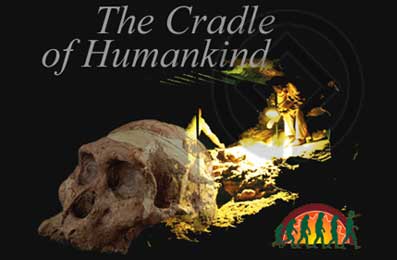
The Sterkfontein Caves in Gauteng, part of the UNESCO-listed Cradle of Humankind, are the site where some of the oldest known human skeletal remains in the world were discovered, dating back approximately 3.5 million years. These findings place South Africa at the centre of our shared human story.
In this third instalment of the series What Makes South Africa Unique, we explore several archaeological discoveries that highlight the country’s contribution to understanding human origins, early innovation, and cultural expression.
- Fossilised human footprints were discovered at Langebaan Lagoon in the Western Cape, preserved in ancient dune rock.
- Dating back approximately 117,000 years, these are among the oldest known footprints of anatomically modern humans.
- The Karoo region contains the majority of the world’s known proto-mammalian fossils.
- At Blombos Cave near Mossel Bay, Middle Stone Age people engraved pieces of ochre around 80,000 years ago, regarded as the oldest known artworks.
- Evidence suggests these early inhabitants were among the first to use tools such as toothpicks.
- The oldest jewellery in the world, a string of beads made from gastropod shells, was discovered in this region.
- The world’s earliest known toolkit, consisting of bone implements and sharpened stone flakes, was also unearthed here.
These discoveries demonstrate how early tools, adornment, and craftsmanship developed alongside human evolution. Visitors interested in seeing how these archaeological foundations connect to gemstones, jewellery, and early manufacturing techniques can explore the Museum of Gems & Jewellery, where ancient tools, natural materials, and jewellery heritage are presented within a broader historical context.
South Africa’s archaeological heritage is something to be deeply proud of, offering insight into creativity, innovation, and human progress that continues to resonate today.
The next article in this series will explore further aspects of what makes South Africa unique, including its people, business landscape, and infrastructure.