Palladium is a rare, lustrous, silvery-white metal discovered in 1803 by William Hyde Wollaston. He named it after the asteroid Pallas, which was discovered in 1802 and named after the goddess Pallas Athena.
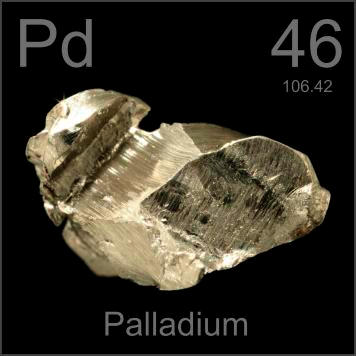
Palladium, platinum, rhodium, ruthenium, iridium, and osmium form a group of elements known as the Platinum Group Metals (PGMs). These metals share similar chemical properties; however, palladium has the lowest melting point and is the least dense of the group.
Economically viable ore deposits of palladium and other PGMs are relatively rare. The most significant deposits are found in the Bushveld Igneous Complex in South Africa, the Stillwater Complex in Montana (USA), and the Norilsk Complex in Russia.
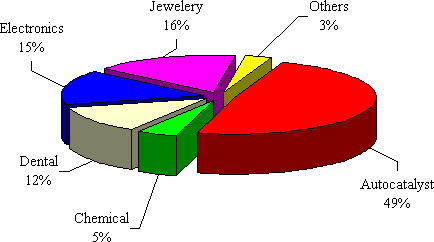
More than half of the world’s palladium supply is used in catalytic converters, where it helps convert harmful exhaust gases into less harmful emissions such as carbon dioxide and water vapour. Palladium is also used in dentistry and in the manufacture of fuel cells, which combine hydrogen and oxygen to produce electricity, heat, and water.
In the context of fine jewellery, palladium has emerged as a valuable and versatile precious metal.
Applications of Palladium
Palladium in Jewellery
In the modern era, palladium was first used in jewellery during the Second World War, when platinum was reserved for military purposes. As recently as 2001, palladium was more expensive than platinum and was primarily used in the production of white gold alloys.
Although palladium-based white gold alloys are generally more expensive than nickel-based white gold, they are non-allergenic, unlike nickel alloys, which can cause skin sensitivities.
In the early 2000s, as gold and platinum prices increased sharply, goldsmiths began seeking a more affordable alternative to platinum. This led to the development of palladium alloys that are workable, hypoallergenic, tarnish-resistant, and do not require rhodium plating. Among these, the alloy consisting of 95% palladium and 5% ruthenium has become the most widely used.
Palladium jewellery in South Africa is marked with fineness stamps such as Pd850, Pd900, or Pd950. The number indicates the parts per thousand of palladium present in the alloy.
Palladium offers many of the same advantages as platinum:
- It is a rare white precious metal that does not tarnish and typically requires no rhodium plating.
- It is slightly lighter than platinum, which some wearers prefer.
Palladium remains relatively unfamiliar to many consumers, largely because it is not promoted to the same extent as platinum. However, for jewellery applications, it represents an excellent alternative for those seeking a refined white precious metal with outstanding wearing properties.
If you would like to explore palladium for a bespoke piece of jewellery, you are welcome to contact Prins & Prins for professional guidance and a tailored quotation.