How a Rough Diamond Becomes a Jewel: Inside the Cutter's Bench
A rough diamond does not sparkle. Out of the ground it can look like a dull lump of glass, and most people would walk past it without a second glance. That is the whole story of diamond cutting: everything you admire in a finished stone was put there by somebody making one careful decision after another.
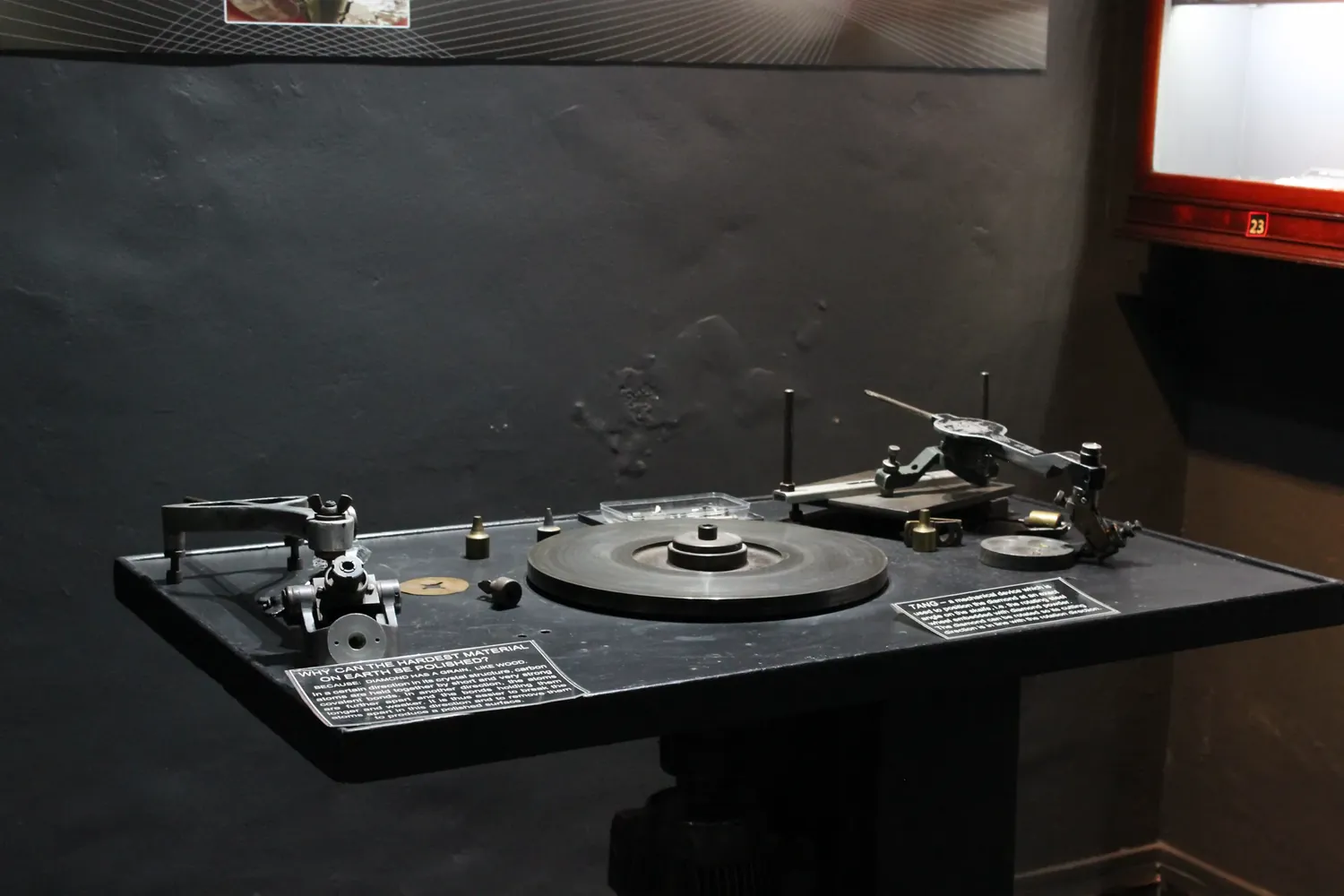
The riddle at the centre of the trade
A diamond is the hardest natural substance on earth. So what cuts it?
Only another diamond. That much is widely known, and it still holds at the polishing wheel, which is charged with diamond powder, even though lasers now do much of the sawing.
The deeper part is the one that built the craft. A diamond is not equally hard in every direction. Like a piece of timber, it has a grain. In some directions the crystal resists almost everything you can do to it. In others it will yield.
The cutter’s real skill is reading that grain. Finding the direction in which a particular stone will allow itself to be worked, and setting the wheel accordingly.
Get it right and the diamond polishes to a flawless face. Get it wrong and the wheel makes almost no impression. The grain works in a second way too: a diamond splits cleanly along certain planes, so a sharp blow in the wrong place can break the hardest material on earth in a moment.
This knowledge has passed from master to apprentice for centuries, and it remains as much feel as science. South Africa’s own chapter of that story is told in The History of Diamond Cutting in South Africa.
The five stages
One, planning. The stage that decides everything else.
The cutter studies the rough to see what it can become. Inside a single piece of rough there may be one large finished gem, or several smaller ones. Choosing between those outcomes is worth a great deal of money in either direction, and the decision cannot be revised once the saw has gone through. Today scanners map the outline of the rough and plot its inclusions, but an important stone may still be studied for weeks or even months before the first cut is made.
This is where experience earns its keep. Everything downstream is execution.
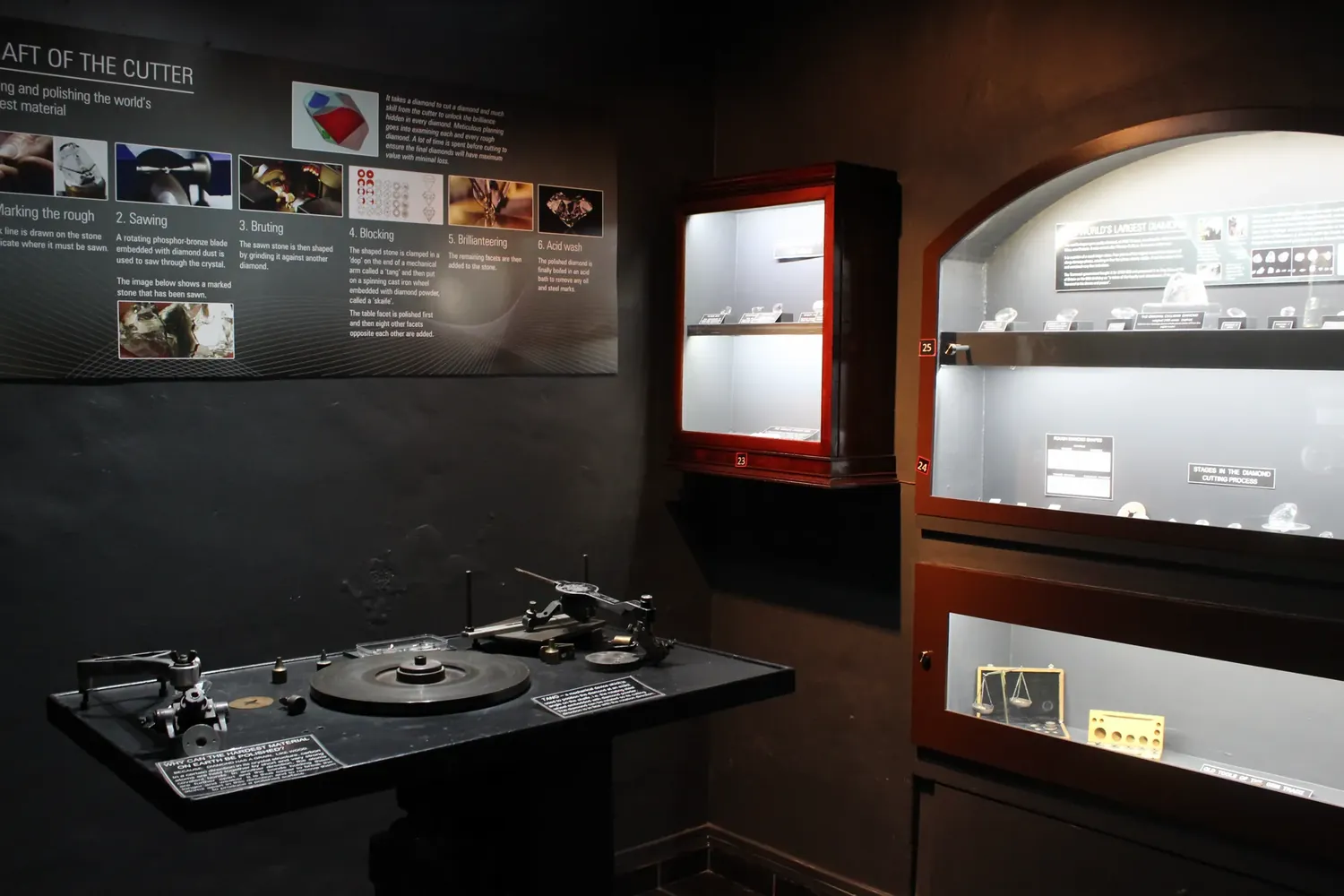
Two, cleaving or sawing. Dividing the rough. Cleaving splits the stone along its grain, one of the natural planes of weakness in the crystal, with a single sharp blow. Sawing cuts through it in directions it will not split, more slowly, traditionally with a thin spinning blade charged with diamond dust and today often with a laser.
Three, bruting. Also called girdling. The stone is rounded into its basic outline, traditionally by turning it against another diamond, which is where the riddle becomes literal.
Four, polishing. This is where the facets are made. Each one is ground onto the stone on a spinning wheel called a scaife, charged with diamond powder, at an angle calculated so that light entering the top is bounced around inside and returned to the eye rather than leaking out of the bottom. In a diamond, faceting and polishing are one process: each facet is polished to a mirror finish before the next is begun. On a round brilliant, with its 57 or 58 facets, the work comes in two rounds. Blocking puts on the main facets, and brillianteering adds the rest.
This is where brilliance and fire are made or lost. The round brilliant is only one design, and step cuts, rose cuts and the rest are explained in Gemstone Cuts Explained.
Five, inspection. The finished stone is cleaned and checked under magnification for its polish, symmetry and quality, and anything that falls short goes back to the wheel.
Every stage serves two aims that pull against each other. Draw the greatest possible beauty from the stone, and keep as much of its precious weight as you can. The tension between those two is the whole art.
The panel above the bench in Space D tells the same story in six steps. It names the two rounds of polishing separately and ends with an acid bath that cleans the finished stone.
Then it goes to be judged
Once finished, the stone can be sent to a laboratory such as GIA, which created the four Cs and grades diamonds on them. Cut, colour, clarity and carat weight. Those four words are the shared language of diamond value anywhere in the world.
Of the four, cut is the one that belongs to the cutter. Colour and clarity are largely nature’s work, settled deep underground long before anyone saw the stone, although the planner decides where inclusions end up and whether some can be cut away. Carat weight is capped by the rough. Cut is the human contribution, which is why a smaller, beautifully cut stone can outshine a larger, poorly cut one.
Cutting is one stop on a much longer road, traced in From Mine to Ring: The Journey of a Diamond.
The engraver, for scale
If you want a sense of how far hand skill can be pushed, Space D holds medallions by Mauro Pagliari, an Italian-born master engraver and die sinker who built his career in Cape Town.
In 1978 Vladimir Tretchikoff’s paintings of the Ten Commandments were turned into a series of ten medallions. Pagliari created them, and the South African Historical Mint issued them in limited editions, in gold and in gold-plated silver. A die carries its design in reverse, like a photographic negative, and metal cut away from it can never be put back, so a single slip can ruin all the work that came before.
Translating the soft colour and brushwork of a painting into nothing but relief in metal is an extraordinary thing to attempt. Set the medallions beside the original images and the achievement makes its own case.
The hand and the machine
There is a persistent idea that computers have pushed the old skills out of jewellery. What happened is more interesting than that.
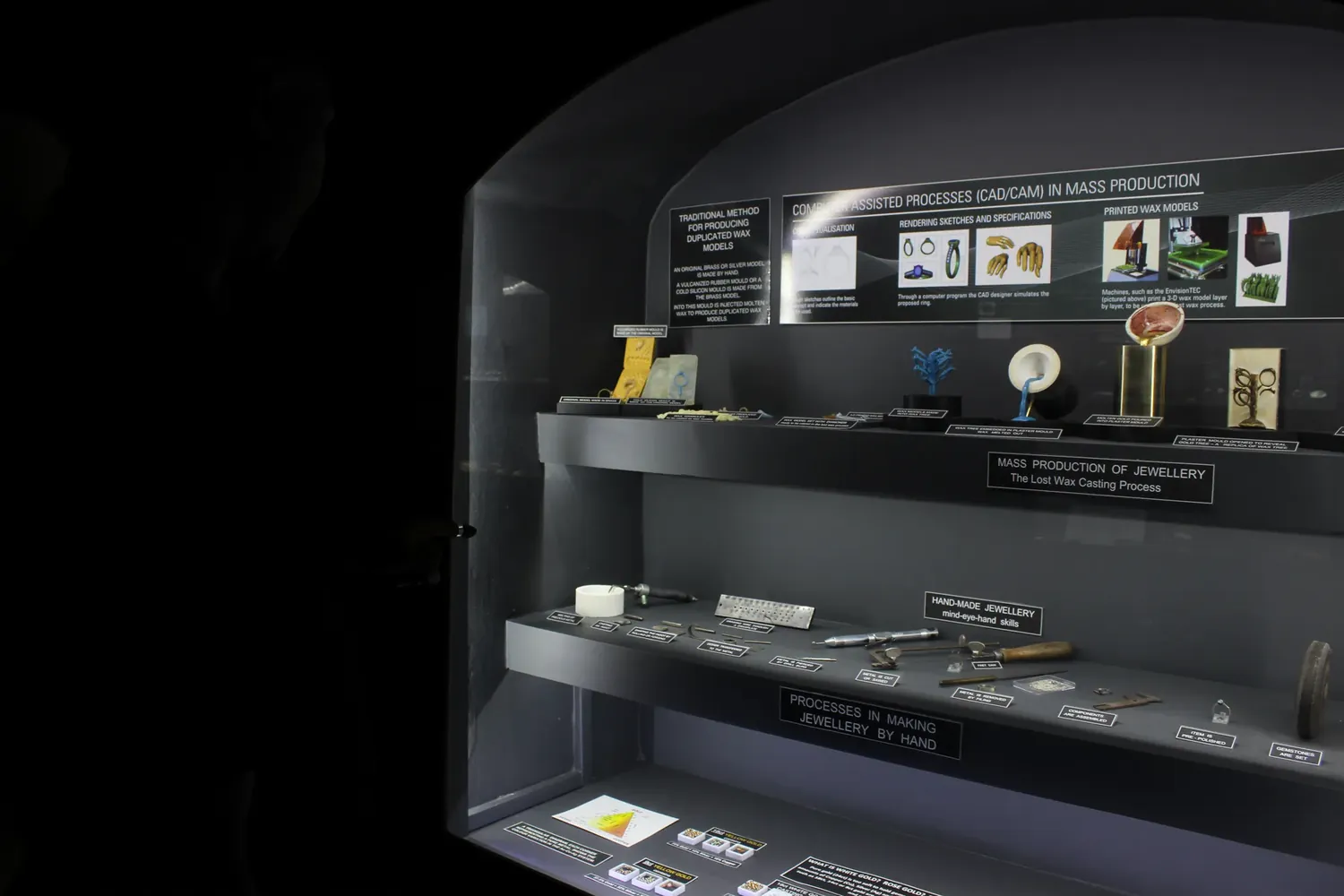
A designer now models a piece in fine detail on screen. The model is printed in wax. That wax is then cast in platinum, gold or silver using the lost wax method, which goes back thousands of years. The newest technology and one of the most ancient meet inside a single ring.
Handmade work still carries the mark of its maker, and many hours of forging, sawing, engraving and setting. No two pieces come out identical, and a fine handmade jewel is a small sculpture with the personality of the hands that made it. Mass production brings good design within reach of people who could not otherwise afford it.
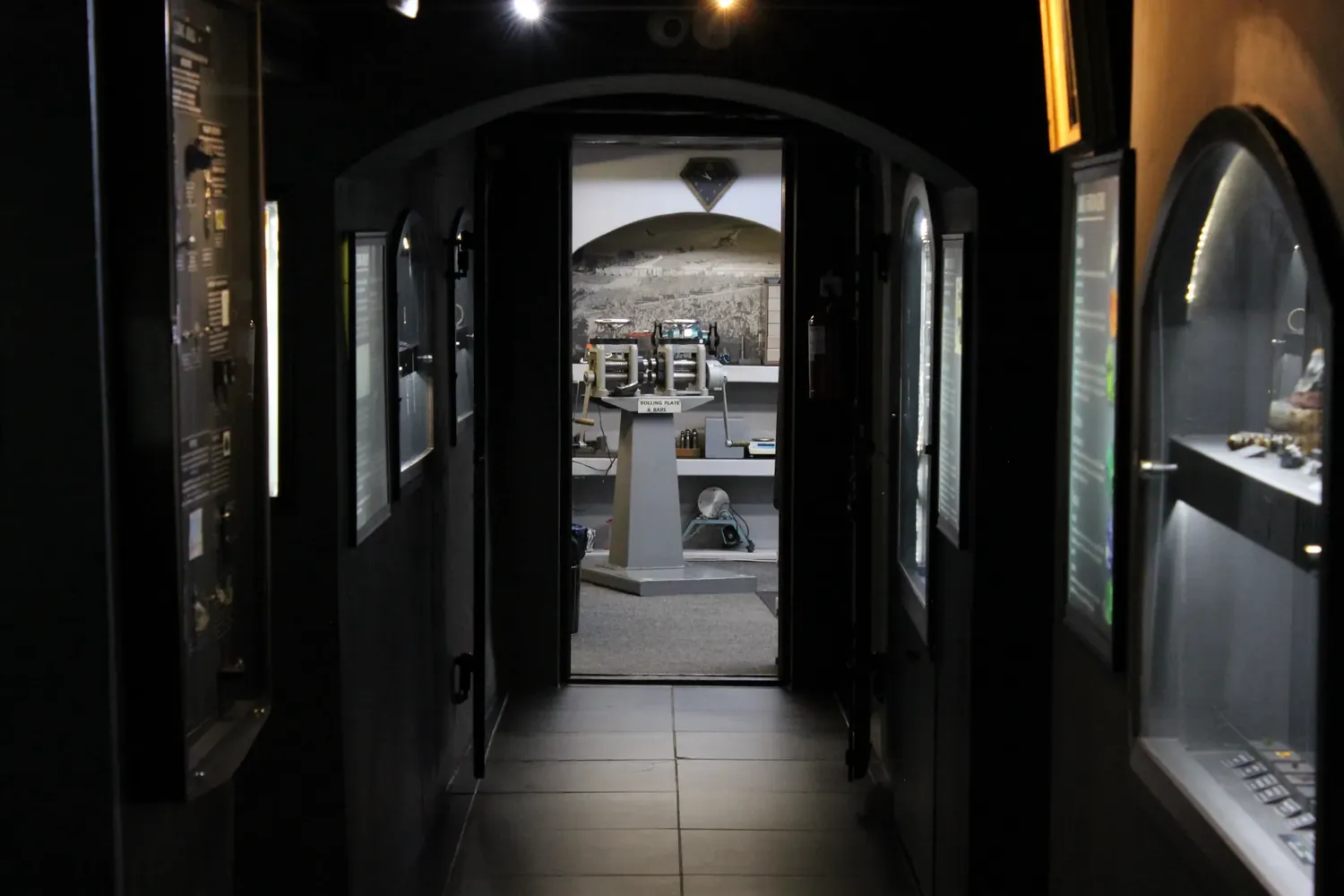
In a working shop, including the one upstairs from our museum, both run side by side, each doing what it does best.
Come and watch it happen
The polishing bench stands in Space D. If time allows, one of our consultants will sit down at it and show you the craft with their own hands. There is no better way to understand why the grain matters.
The Museum of Gems & Jewellery is at Huguenot House, 66 Loop Street, Cape Town. Entry is free and visits are by appointment, so book your visit before you come. An English audio guide takes you display by display, and the workshop is upstairs.
Frequently asked
Can a diamond really only be cut by another diamond?
For polishing, yes: the wheel that puts each facet on a diamond is charged with diamond powder, because nothing else natural is hard enough. Sawing and shaping are now often done by laser.
What is diamond grain?
Diamonds are harder in some crystal directions than others. Cutters polish along the softer directions, because in most others the wheel barely touches the stone.
How long does cutting take?
It depends on the size and complexity of the stone. Planning an important stone can take weeks or even months, while GIA has described about two hours of polishing for a straightforward one-carat round brilliant in a modern factory.
Can a diamond break while it is being cut?
It can. Hardness resists scratching, not breaking. A diamond splits along its cleavage planes, so a hard blow in the wrong direction can cleave it, at the bench or long afterwards.
Who decides the shape?
The cutter, during planning, based on what the rough will yield in beauty and in weight.
Sources:
Gemological Institute of America: The Diamond Cutter’s Art (Part 1)
Gemological Institute of America: Visit to Chow Tai Fook Diamond Cutting Factory in Foshan, China
Gemological Institute of America: How to Protect Your Diamond from Chipping
Gemological Institute of America, Gems & Gemology: Summer 1997 issue, on polishing direction and the grain of diamond
Gemological Institute of America: GIA 4Cs Cut
Gemological Institute of America: Understanding the 4Cs of Diamond Quality
Fred van Staden, South African Journal of Cultural History (2014): An overview of noted gold and silversmiths in South Africa in the 1950s
Strauss & Co: The Ten Commandments medallions by Vladimir Tretchikoff, South African Historical Mint, 1978
United States Mint: Die Making
The Metropolitan Museum of Art: Collaborative research with the Republic of Iraq on an ancient casting technique
Continue your reading.
Vintage Jewellery from the Cape: Preserving Cultural Elegance
In Cape Town
Read article
Cape Town’s Diamond Legacy: Why Global Travellers Shop Here
Cape Town’s diamond story is one of legacy, craftsmanship, and authenticity. From the early days of South Africa’s diamond rush to the heritage ateliers of today, the city continues to attract global travellers seeking Certified Diamonds Cape Town and Bespoke Diamond Jewellery of exceptional provenance. Within the walls of historic Huguenot House, Prins & Pr
Read article
Luxury Travel Jewellery Stopover: Why Affluent Travellers Choose Cape Town’s Heritage Jewellers
Cape Town has become the hidden gem of luxury travel, a destination where heritage, artistry, and authenticity converge. At Prins & Prins Diamonds, international travellers discover more than fine jewellery; they encounter the soul of South African craftsmanship. Within the historic walls of Huguenot House, natural diamonds and rare gemstones are transforme
Read article