101 Unique Features of Diamonds – Part 2
In this second instalment of our series, we continue exploring the remarkable and often surprising properties of natural diamonds. Below are features numbered 21 to 38, highlighting their physical behaviour, historical significance, and optical characteristics.
- When doped with trace elements, diamond can function as a semiconductor.
- Despite being one of the most valuable materials known, diamond consists of carbon, one of the most common elements on Earth.
- A colourless diamond is among the purest natural materials, containing virtually no elements other than carbon.
- Diamond has the lowest coefficient of thermal expansion of any known material and does not expand when heated.
- Diamonds were first discovered in India over 2,500 years ago.
- In the 18th century, diamonds were discovered in Brazil.
- The first diamond in South Africa was found near Kimberley in 1866.
- Due to industrial demand, more diamonds are now produced synthetically for industrial use than are mined naturally.
- The largest diamond ever discovered was the Cullinan Diamond, weighing 3,106ct (just under 1.5 pounds).
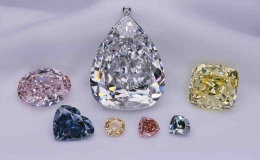
- The Cullinan was cut into nine major stones. Two were presented to King Edward VII and are now part of the British Crown Jewels.
- The internal pressure within a diamond is comparable to pressures found 150 kilometres below the Earth’s surface.
- Because no substance can abrade it, a diamond retains its polish indefinitely.
- Red diamonds are the rarest and most valuable; a 0.93ct stone sold for close to US$1 million.
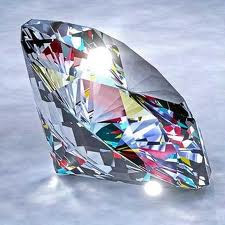
- The “fire” of a diamond refers to the dispersion of white light into spectral colours.
- Scintillation describes the flashes of light produced when a diamond or light source moves.
- Black diamonds were historically rare; many are now colour-enhanced in laboratories.
- Fancy-cut diamonds are those shaped other than round brilliant.
- Fancy-colour diamonds are those whose colour is neither yellow nor brown, unless the colour is of intense saturation.
We invite you to continue following our educational series “101 Unique Features of Diamonds” for further insights into the extraordinary world of natural diamonds.